

The Darts get a jump on Halloween with their newest release...
THE DARTS (US), now based in Seattle, Washington, formed in 2016 to make great all-grrl garage-rock, see the world, and have a fab slumber party every night. The four women threw on vintage black slips, kicked off their shoes, and set out on the adventure. In the first year, the band put out two self-produced EPs and signed with Dirty Water Records (UK), which then released the first full-length vinyl, Me.Ow. (2017). Dirty Water then re-released the first two EPs as a second full-length vinyl, The Darts (2017). The band immediately went on tour with The Living End and Billie Joe Armstrong’s The Longshot, and soon found themselves on big European stages like Sjockfest, Cosmic Trip, and Roots n Roses.
In 2018, Jello Biafra signed The Darts to his label, Alternative Tentacles, and released their first 7-inch, Bullet (2018), and the third full-length record, I Like You But Not Like That (2018). The band toured the US supporting The Damned, performed on main stages at big festivals like Punk Rock Bowling, Hipnosis Fest, and The Bash, and got placements on top TV shows like Peaky Blinders and reviews in Rolling Stone. During the pandemic, Vox Guitars hosted a Darts’ Instagram Live session, garnering over fifty thousand viewers. In 2022, The Darts released the EP Love Tsunami on Adrenalin Fix Music (FR), toured it around the US and Europe, and performed a studio session on legendary KEXP.
In 2023, Alternative Tentacles released The Darts’ fourth LP, Snake Oil, funded entirely by fans and co-produced by Jello Biafra himself. The band went on a 100-day European tour, with unique European editions of Snake Oil and many sold-out shows, plus appearances at top festivals Munster Raving Looney Party (Spain), Relache Fest (France), Festival Beat (Italy), Loungefest (Holland), and Muehlen Madness (Germany). The first pressings of Snake Oil sold out in both the US and Europe in less than two months, and second pressings were rushed out on both continents during the tour.
While juggling the Snake Oil tour, the band recorded their fifth full-length record, Boomerang, with Grammy-winning producer Mark Rains (Hoover iii, Death Valley Girls) at Station House Studio in Los Angeles. Once again, the album was released by Alternative Tentacles on different US and EU editions in March 2024, and the release was again followed by over four months of touring in Europe, UK, and USA. The album catapulted the band into feature articles in Rock n Folk, Rolling Stone, and many other major publications, plus appearances on France 24 television, BBC radio, a heavily-publicized live show inside Barlinnie Prison for the prisoners in Edinburgh, and inclusion on many best of 2024 lists. During the massive tour, the band stopped to record two new singles in France, which were then released exclusively on a compilation of essential tracks, Nightmare Queens (2025). The compilation album continuously sold out and had to be repressed three times in ninety days.
In 2025, with a new lineup of singer/founder Nicole Laurenne (lead vocals, organ), Lindsay Scarey (bass, backup vocals), Rebecca Davidson (guitar), and original Darts drummer Rikki Watson (drums, backup vocals), the band toured the entire USA and again invaded Europe for several months, performing on the main stage at huge international festivals: Binic Folk & Blues Fest, BearStone Fest, Relache Fest, Boneyard Weekender, Rocketmen Fest, CornRock Fest, Dollfest, Gonerfest, and Tough Enough Fest.
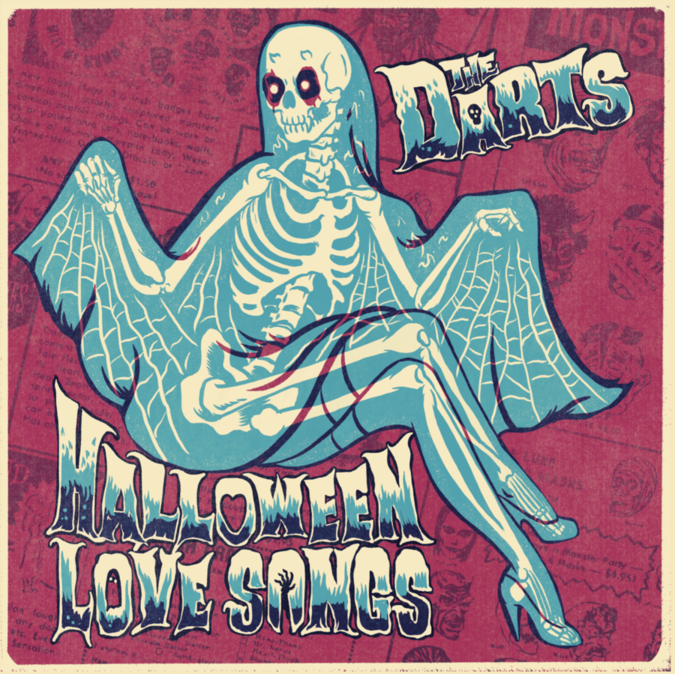
The band returned to the studio at Station House in Los Angeles and recorded the latest full-length LP, Halloween Love Songs (2026). Nicole wrote the album with the intention of side A being spooky-fun Halloween kitsch for trick-or-treating as the sun sets, and the darker sound of side B rocking the after-midnight bonfire with the leftover candy. Lead track “Midnight Creep” (written by Laurenne and Scarey) will be featured in a video by Frogman director Anthony Cousins, and “Apocalypse” - with Davidson and Scarey performing it - was featured in a recent Gretsch Guitars advertisement. A huge album release tour is now in play for the USA, Europe, UK, and Japan, which will encompass most of 2026.
PRESS
“Such f**king energy..damn, this blast of rock'n'roll is so good” - La Grosse Radio (FR)
"They have clearly conquered Europe..incandescent..these four girls kick ass." - Rock n Folk (FR)
“Songs like ghost trains on mushrooms and the manifestos of bad girls. The albums get better each time.” - Rolling Stone (FR)
"Gets even the most apathetic nerds moshing. Crank it!" - Rolling Stone (FR)
“Raw, unfiltered sound..a bold, retro-horror aesthetic [with a] grunge sonic identity.” - New Noise (USA)
“Mischievous noir witches steal your hearts..and transform your nightmares into desires.” - EyeZine (Italy)
“Intoxicating..a completely wild ride from start to finish..best of 2024.” - Vive Le Rock (UK)
"Near Manzarek-level organ wizardry…a hands-down tour-de-force stunner." - Jello Biafra (ex-Dead Kennedys)
"One of my new favorite bands." - Dave Vanian, The Damned “The Darts put on an incredible live show.” - BBC Radio (Scotland)
"The Darts smolder and shine like a serpent at the end of a rainbow." - Blag Dahlia, The Dwarves
"The Darts 'Take What I Need.' Very cool." - Stephen King, author
"Fabulous...I'm hooked." - Ken Foote, CBS (Dallas)
"The Coolest Song In The World" - The Underground Garage (SiriusXM Radio)
“Nicole mistreats her Farfisa and crowdsurfs to the delight of the crowd. An explosive performance.” - La Grosse Radio (FR)
"Cramps' spooky punk and Stooges/ raw chaos, by a quartet of garage goddesses." - RockNYC (USA)
"A majestic album of aggressive, wild garage rock. Explosive." - Rockerilla (Italy)
"The talent in this band is off the charts." - 50thirdand3rd (FL)
“Top-notch songs and energy to spare..hypnotic, haunting, captivating..I am melting.” - WTR Metal Mag (FR)
"Like getting hit by a freight train full of inflatable dolls." - Rumore (Italy)
"One of the most exciting bands on or off the stage" - Turn Up The Volume (Belgium)
"One of the greatest revelations of dirty American rock 'n' roll" - Musica Inclasificable (Mexico City)
"The Darts f*ing rock" - Phoenix New Times (AZ)
"Best new band I have seen." - John Carlucci, The Underground Garage (NYC)
"A knock-out punch." - Rich's Rants n Raves (Las Vegas)
"The best girl band in the universe." - Blog Da Buzzo (Brazil)
"Exciting, sweltering..consumes all of your garage rock desires." - Java Magazine (AZ)
"Move over Vincent Vega, I'm going with The Darts. Bloody Ace." Mass Movement (UK)

No Futuro exists in the space between memory and erasure. Reconvened in Seattle after a quarter century of silence, producer/composer Jeremy Moss and vocalist Roderick Wolgamott (of Sky Cries Mary) have stripped the project to its essential core — slow, dub-soaked beats rising like groundwater beneath Roderick's voice, which moves between poetry, prophecy, and the last words of something unnamed.
Their new EP, No Pasado, features guitar from Kevin Whitworth of Seattle underground legends Love Battery, and was mixed and mastered by Jack Endino — the architect of the Seattle sound. It carries that lineage in its bones while refusing to belong to any moment in particular. This is music with no past and no future. Only the weight of right now.
Lou Reed at the edge of the city. Massive Attack in the hours before dawn. Seefeel dissolving into static. No Pasado is four songs that sound like they've always existed, somewhere just out of reach.

Seattle’s all-grrl garage-punk vixens The Darts kick off their new album cycle with “Midnight Creep,” the first advance single from their upcoming LP Halloween Love Songs, out March 3. The single drops Tuesday, January 13 on Adrenalin Fix Music (EU) / Meow Hiss Music (US) and finds the band slipping deeper into the spooky, campy, 60s-trash universe they’ve been flirting with since day one. If you’ve ever wished the Back From the Grave comps came with a dance craze, you’re already in the right neighborhood. The Darts have spent the last decade carving their name into the global underground with Farfisa-first garage chaos, big European tours, multiple sold-out vinyl runs, KEXP sessions, cult-classic festival appearances, and fans ranging from Dave Vanian to Stephen King to Jello Biafra. The current lineup, Nicole Laurenne (vocals/keys), Rebecca Davidson (guitar), Lindsay Scarey (bass), and the returning Rikki Watson (drums), feels like the most dialed, dangerous, and joyfully unhinged version of the band yet.
“Midnight Creep” started as a surprise curveball when Lindsay brought Nicole a demo called “Phantom Creep.” Nicole was already quietly writing a Halloween-themed album and immediately heard a chance to chase something different: an honest-to-ghoul 60s-style monster dance, the kind that might’ve aired on a haunted Shindig episode taped in a basement full of fog machines and paper-mâché bats. She rebuilt the tune into a slinky, organ-driven earworm; Lindsay created a simple, go-go-friendly choreography; and suddenly The Darts had a Halloween banger that felt both brand-new and weirdly familiar.
They’ve been testing it on the road for months, from Switzerland to Cincinnati, and everywhere in between. The reaction has been instant every night. Whole rooms start doing the dance without needing to be shown. It’s instinctive, like the ghosts of old 45s are moving people around by the hips. To bottle that energy, they teamed up with Frogman director Anthony Cousins, who shot a gloriously campy video steeped in B-movie mood: basement gloom, creature-feature attitude, and the dance front and center for anyone ready to join the creep. It looks like the lost midnight-movie segment the 60s forgot to broadcast.
Nicole Laurenne: vocals / keys
Becca Davidson: guitars
Lindsay Scarey: bass
Rikki Styxx: drums, percussion

Former Iya Terra guitarist and vocalist Nick Sefakis has long been one of the strongest and most expressive guitarists in the modern reggae circuit. His passion for roots reggae comes through not only in his live shows but in every note he records. On In Time, he teams up with Southern California band Eureka Sound, whose soulful chord progressions and weighty, syncopated rhythms create a lush foundation for an album overflowing with heart, spirit, and positive vibrations.
The record opens with “Lift Up Your Head,” easing listeners in with flute lines layered over nyabinghi drums before dropping into a rich roots groove. Sefakis delivers a warm and uplifting vocal performance emphasizing love, resilience, spiritual protection, and self-growth. The track becomes even more powerful with a guest verse from Dezarie, whose soulful tone blends seamlessly with Nick’s delivery.
“Walls of Babylon,” featuring The Congos and Cedric Myton, stands as the album’s spiritual and political centerpiece. Sefakis’ higher-pitched vocal approach fits perfectly atop the vintage riddim, channeling protest, justice, and liberation. Myton’s signature falsetto enters with fire—raw, emotive, and deeply rooted in classic roots reggae tradition.
The vibe shifts into unexpected yet brilliant territory with a 70s-inspired funk jam featuring Mike Love. Despite being a stylistic curveball, the track feels completely at home on the album. Nick and Mike’s voices—both typically associated with roots reggae—glide effortlessly through the groove, creating one of the most infectious and dance-worthy songs on the project.
Returning to the familiar warmth of roots reggae, “Praises” rides a steady skank, vibrant horns, and deep bass, while “Guiding Star” shines as a heartfelt reggae love song. Full of gratitude and devotion, the track portrays love as a source of peace and direction, uplifted by lyrics like “Sunshine on a cloudy day” and “You’re my beacon in the dark.” Italian reggae band Mellow Mood joins Sefakis, adding a gorgeous harmonic contrast.
“Voices Unto Jah” continues the spiritual momentum, celebrating unity, faith, and divine connection over a classic riddim enriched with expressive horn arrangements. That spiritual energy gives way to a smooth and soulful rocksteady vibe on “Mary Jane,” a warm, upbeat ode to cannabis personified as “Miss Mary.” The track’s gentle swing and higher-pitched vocal delivery make it instantly charming.
The album closes with “Fire Burning,” featuring Tribal Seeds. Here, Sefakis delivers a more forceful vocal presence, using fire as a metaphor for inner strength and spiritual determination. The horns soar, the riddim hits heavy, and Steven from Tribal Seeds adds a mystical, haunting verse to close the record with impact.
In Time is a rich collaborative achievement, merging roots reggae with touches of jazz, soul, and funk. Sefakis shines on both guitar and vocals, while Eureka Sound members—David Yun, Ryan Berty, Supah Sal, Tyler Last, and Blake Bartz—provide tight, expressive instrumentation supported by a phenomenal horn section. Co-production by David Yun and Supah Sal, along with mastering from Downbeat Mastering, results in a warm, cohesive, and vibrant listening experience.
The album embodies the true essence of roots reggae: love, strength, resilience, growth, and spiritual protection. It is a soulful, meaningful journey from start to finish.
One Love — Todd M. Judd

Popcaan’s Nothing Without God is a reflective, deeply spiritual turning point for the dancehall star—a project rooted in gratitude, resilience, and purpose. Marking his first major release since parting ways with OVO Sound, the album arrives as a mature, focused body of work. Across 14 tracks, Popcaan blends spirituality and introspection with his signature energy, offering an uplifting message that resonates even more strongly in the wake of Hurricane Melissa’s devastation. Though completed just weeks before the storm, the album’s themes now feel almost prophetic.
The journey begins with "Immortal Life," where Popcaan confronts legacy and life after death over a subtle, snare-driven beat. His flow is sharp and defiant, setting a tone of honesty and self-examination that carries through the album. The title track, "Nothing Without God," is the project’s spiritual anchor, highlighting the artist's growth and unwavering belief in divine protection. "I really don’t do nothing without God," he told the Jamaica Observer, and that conviction permeates every lyric.
"Family First," featuring his younger brother Natebadz, is one of the album’s most refreshing cuts. Their back-and-forth chemistry feels natural, playful, and heartfelt—a collaboration that begs for a follow-up.
On the more introspective side, "God Nah Leave" radiates spiritual conviction, acknowledging a source of strength beyond fame. Later, "One Million Bees" revisits themes of loyalty and betrayal, directly addressing those who turned away from him during harder seasons. Even here, Popcaan’s tone is less confrontational than reflective; it’s about endurance, not revenge.
"Climb Up," with its sweet, uplifting groove, feels perfectly timed—a sonic hug for a country rebuilding in real time.
"Carrying It Home" dives into the struggles of poverty, ambition, and the obligation to provide. Over a militant, pounding riddim, Popcaan delivers a charged, emotional performance about hustling for family and pushing against systemic barriers.
"Life Nice" pulls things into a gentler space, celebrating gratitude and everyday joys with one of the album’s most expressive piano-driven arrangements.
"Opportunity" brings back a more melodic, uplifting tone while showcasing Popcaan’s lyrical sharpness. Its purposeful message is complemented by the reflective "Preserve Me," produced by his nephew Joel Engineer. It’s one of the album’s most personal moments—a plea for divine protection and a reminder to remain steadfast when the world feels dark.
"Greatness Inside Out" is a motivational anthem centered on inner power and self-belief. It reinforces the album’s recurring theme: true greatness starts within. "Soldier" expands this message outward, paying tribute to fallen comrades, loyal friends, and the resilience of Jamaican communities. Military metaphors frame a story of survival, unity, and respect for those who stood firm beside him.
On "Kick It Wid Myself," featuring Chronic Law, Popcaan reinforces independence and self-reliance—a fitting perspective as he transitions into a new era of his career. Chronic Law adds warmth and soulfulness, complementing the lead artist's confident, reflective tone.
Popcaan ends the album on a surprising and refreshing note with "We Alright," a one-drop reggae closer that lifts the spirit and ties together the album’s overall message of hope. It’s an optimistic finale, leaving listeners with a sense of calm, rebirth, and direction.
With production from Anju Blaxx, Droptop Records, Damage Music, Dre Skull, and Joel Engineer, Nothing Without God fuses modern dancehall with soulful, minimalist textures. The arrangement never overwhelms; instead, it allows space for meaning and mood. The result is an album that feels honest, grounded, and timeless.
As Jamaica unites to rebuild after Hurricane Melissa, Nothing Without God resonates as a soundtrack for recovery—a reminder of faith, community, and resilience. "It’s not just about me or music," Popcaan shared. "It’s about the people, the country, and remembering that we’re still blessed. Jamaica strong, and God still deh yah."
More than an album, this is a declaration of purpose. Popcaan enters a new chapter—one defined by maturity, gratitude, and spiritual depth—without losing touch with the dancehall essence that made him a global force. Nothing Without God stands as a testament to endurance, evolution, and the unshakable spirit of Jamaica.
One Love – Todd M. Judd

Hello friends and party people, Thanks again to all who participated in our HUNNYPOT 25-YEAR anniversary event. Truly an unforgettable night, photos by Marc Tyrrell below. We surprised everyone and debuted the THE HUNNYPOT STORY - OFFICIAL DOCUMENTARY TEASER TRAILER, and now you can see it here. Love to hear your thoughts on this work-in-progress project. Click the link, scroll down, ENJOY, and HAPPY HOLIDAYS! - Hot Tub Johnnie
For 23 years, Hunnypot wasn’t just a party — it was the beating heart of LA’s music discovery culture. Founded and hosted by John “Hot Tub Johnnie” Anderson, the weekly Hunnypot events became a creative sanctuary for artists, publishers, producers, and music supervisors navigating an industry in freefall.
This feature documentary follows Johnnie’s personal boom-and-bust journey while exploring the rise, struggles, and realities of modern music supervision. As budgets shrank, streaming disrupted income, and a 2023 unionizing effort collapsed, the Hunnypot community became a rare haven for connection, discovery, and survival.
Hunnypot was also the birthplace of the Guild of Music Supervisors — one of the most influential organizations in film, TV, advertising, and gaming.
The Hunnypot Story captures a cultural moment, a creative movement, and the people who kept the music alive when the industry around them changed forever.

A week after 3OH!3 sent the House of Blues Anaheim back in time to the "scene" days, the Scream Tour 2025 was set to do something similar. The emo and post-hardcore adults flooded the venue to relive their days of headbanging and moshing to some of their favorite Warped Tour bands as Senses Fail and Story of the Year set off on this co-headlining tour with Armor for Sleep. This was the penultimate stop of the tour, and the fans in Anaheim were there to send off these bands with a thunderous show before the end of the year.
Before our opener could even hit the stage, the House of Blues felt nearly packed already. Kicking things off with "Stay on the Ground," the crowd was already giving it their all, singing along and jumping with the band. Vocalist and rhythm guitarist Ben Jorgensen sings with such passion and emotion. His face contorts into exaggerated expressions of what he is singing about so vividly that even people in the back of the venue can understand the emotion of the song. Lead guitarist Erik Rudic still plays the riffs with passion and exuberance as he gets lost in the guitar lines that fans have been streaming through their ears for decades. Bassist Chad Sabo and drummer Nash Breen hold down the low end that keeps the heads bouncing and banging, while the feet seem to be constantly jumping off the floor.
During "The Truth About Heaven," Armor for Sleep somehow blew their PA system, and a nightmare Jorgensen has had his whole life came true. Thankfully, this was a minor setback, and the band was able to get the show back on track a few minutes later. Armor for Sleep showed their tenure as a bigger-than-life band with a setlist fans wanted more out of, featuring tracks like "Remember to Feel Real," "The Outer Ring," "Awkward Last Words," "Dream to Make Believe," "Breath Again," and ending with "Car Underwater." Fans enjoyed every second of this show and wanted to show Armor for Sleep that this show could have been a three-way co-headlining show.
Up next was the first of our co-headliners with Story of the Year taking the stage. These guys wanted to show just how fun their set was going to be by first rolling onto the stage on Razor scooters, hitting ice skating poses. It was such a lighthearted and fun way to get the crowd amped up for their set. But once they grabbed their instruments, they launched into their newest single "Gasoline (All Rage Still Only Numb)," which was an intense, in-your-face screamer. Vocalist Dan Marsala creates a duality in his voice through his screams and melodic vocals. Both carry a power and presence to them that has you catching onto the lyrics and singing with the band by the second chorus. Guitarist Ryan Phillips and bassist Adam Russell both felt like Energizer bunnies, as they were constantly running around the stage, posing, jumping, and playing to the back of the venue. They were determined to grab the attention of every person in the crowd. Meanwhile, drummer Josh Willis flowed through his drumlines, combining melody and rhythm with hard-hitting blasts that got the mosh pits spinning.
Story of the Year kept this momentum up for their entire set which featured songs like "And the Hero Will Drown," "War," "Tear Me to Pieces," "Anthem of Our Dying Day," "Real Life," "2005," "Our Time is Now," "We Don’t Care Anymore," "We’re Not Gonna Make It," "Sidewalks," "In The Shadows," "’Is This My Fate?’ He Asked Them," and ending with the emo anthem "Until the Day I Die." Story of the Year are putting the finishing touches on their next album A.R.S.O.N., due out on Feb 13th of next year. The band continues to be in top form, and this new album should continue their legacy.
It was then time for our second co-headliner with Senses Fail taking the stage. Last year they did a two-night event at the House of Blues Anaheim in celebration of their album Let It Enfold You. Where fans got to hear every song from that album, on this tour we got to enjoy music from their entire discography. And I can guarantee there were countless fans who were there last year, who helped sell out this show just for a chance to rock out with Senses Fail again.
Vocalist Buddy Nielsen continues to be the most flamboyant man on stage, and completely captivating. From the mix of a camo outfit and heavy eyeshadow with sparkles, the man is there to make an appearance. Guitarists Jason Milbank and Gavin Caswell continue to drive the songs with the guitar riffs that have helped make Senses Fail songs so iconic. Bassist Daniel Wonacott and drummer Steve Carey were locked in together keeping the low end grooving and heavy. Even during the softer songs, they would keep the beat at a head-banging pace.
Halfway through the set, a fan went down in the pit, and the show had to be halted for medical personnel to attend to them. Thankfully the fan appeared to be okay, and Senses Fail was able to bring the momentum back easily when they took the stage again. Though it wouldn’t have been hard to lose that momentum with a setlist featuring songs like "Buried a Lie," "Double Cross," "Calling All Cars," "Lady in a Blue Dress," "Death by Water," "Wolves at the Door," "You’re Cute When You Scream," "Renacer," "Shark Attack," "Lost and Found," "One Eight Seven," "Rum is for Drinking, Not for Burning," "Can’t be Saved," and ending with "Bite to Break Skin." Senses Fail ended the show with the fans leaving with huge smiles on their faces, full of joy that they got to see this show.
The Scream Tour was a night for emo and post-hardcore kids to relive their high school days. Armor for Sleep, Story of the Year, and Senses Fail were an unbeatable trio of bands to put on an end-of-the-year tour. These three bands continue to put out new music and tour the world nonstop. Though a lineup of this caliber may not come again, you can buy a ticket to any one of their next shows knowing you’re in for a treat.

With Nine Mile, his ninth full-length album, Alborosie delivers one of the most personal and fully realized projects of his career—a vibrant journey through the spirit, sound, and soul of Jamaica. More than a tribute to Bob Marley’s birthplace and final resting place, the album is a musical pilgrimage into the heart of Rastafarian culture and the evolution of reggae itself.
Recorded and produced at his own Shengen Studio in Kingston—home to vintage gear once used by the legendary King Tubby—Nine Mile benefits from the seasoned ears of executive producers Damian Marley and Stephen Marley. Engineers Gregory Morris, Marc Lee, Nikolas Marzouca, and James “Bonzai” Caruso give the album a warm, analog depth that complements its cross-genre palette. The result is a cohesive blend of roots reggae, lovers rock, bossa nova, 80s rock, new wave, and soulful R&B, all unified by Alborosie’s unmistakable tone and consciousness.
The album opens with "Calling Selassie," introduced by the voice of Haile Selassie himself: a powerful invocation that sets the album’s spiritual intentions. It’s a classic one-drop tune with bright horns, meditative energy, and lyrics tracing Alborosie’s personal journeys to Ethiopia.
On "Trench Town Legend," Alborosie crafts an affectionate tribute to Bob Marley, referencing iconic song titles and themes while riding a roots riddim that subtly nods to Marley’s Uprising era, particularly "We and Dem." It’s reverent without feeling derivative—a difficult balance that Alborosie manages with ease.
"No Tan Distintos (Not So Different)" expands the album’s worldview with a heavier guitar sound and a plea for unity amid global chaos. A remake of Argentine punk-reggae band Sumo’s 1987 track, it channels righteous anger with clarity and purpose.
Similarly, "Come My Way" dips into the Marley/Perry era, drawing from the King Tubby Meets the Rockers Uptown riddim and the breezy spirit of "Sun Is Shining." These intertextual layers enrich the album without overshadowing Alborosie’s own voice.
"Cool Down" shifts into a mellow groove, exploring the emotional turbulence of a fading relationship. It balances heartache with gentle self-coaching, landing on a hopeful, human note. "Digital Love" picks up the pace to critique the superficiality of app-driven romance, contrasting fleeting attraction with the longing for something more grounded and real.
The album’s middle stretch bursts with vibrant cross-cultural energy. "Ganas de Verte" introduces a lively Latin vibe, delivered in Spanish and built to make bodies move. "Ipanema" pays homage to the people of Rio de Janeiro, blending bossa nova warmth with a celebration of everyday beauty far from the postcard image of the beach. These tracks show Alborosie’s gift for fusion—expanding reggae’s borders without losing its steady heartbeat.
"Another Day" serves as a reflective breath before the stirring "Zombies," a protest tune that uses the "zombie" metaphor to highlight the emotional and spiritual fallout of war, violence, and social conflict. Alborosie’s vocal performance is raw and gripping.
"Loco Loco" injects funk into the reggae framework, offering a sharp critique of corruption, misinformation, and societal decay, delivered in both English and Spanish. Its message is urgent, but the groove remains irresistible.
"Club Paradise," a remake of Jimmy Cliff’s tune from the film that influenced Alborosie in his youth, is breezy and joyful—a sun-drenched ode to Jamaica.
"When" takes a detour into 70s soul-R&B textures, showcasing how comfortable Alborosie is across genres without diluting his roots identity.
The album closes with its title track, "Nine Mile." Stripped-down and emotionally exposed, it serves as a tribute to the late Jo Mersa Marley and a meditation on the spiritual energy of the place that shaped reggae’s greatest prophet. It’s tender, reverent, and deeply human—a fitting final chapter.
With Nine Mile, Alborosie invites listeners into a heartfelt exploration of Jamaica’s cultural legacy while pushing reggae into new, globally resonant spaces. It’s a project steeped in love, loss, spirituality, and social awareness—all delivered with the craftsmanship of an artist who lives and breathes the culture he honors.
Despite his Italian origins, Alborosie stands today as one of reggae’s most authentic and innovative torchbearers. Nine Mile is a testament not just to where reggae comes from, but to where it can still go.
One Love - Todd R. Judd

Teachers marks the second chapter in Mike Love’s three-part journey that began with Leaders (July 2024) and will conclude with Healers. Once again, Love blends deep wisdom with vibrant reggae grooves, reminding us to stay hopeful, stay grounded, and build stronger communities rooted in love and truth. His voice matters, and his one-of-a-kind talent has earned him a well-deserved place on international stages. Love deserves an even bigger audience—one that extends beyond the reggae scene into popular radio—not because he chases hits (he clearly doesn’t), but because his musicianship, songwriting, and sincerity are that remarkable.
The journey opens with "Jahson’s Song," a 10-plus-minute odyssey beginning with spoken-word poetry that gently glides into a slow, meditative reggae groove. It’s empowering and inspirational, intended to uplift and encourage listeners to live authentically and pursue the "next chapter" of their lives. Love’s shifting cadences and evolving vocal textures make the track feel alive, always moving.
He picks up the pace on "You Oughta Know Better," delivering that unmistakable energy we crave—sing-along harmonies, unexpected breaks, and inventive chord shifts that keep the listener engaged. "Just As You Are" brings a reggae-jazz fusion, playing with tempi and arrangement while offering an impressive lyrical flow as the track subtly accelerates.
After the "Teachers, Pt. 1" interlude, we’re dropped into the musical masterpiece "Fire." A theatrical introduction gives way to an upbeat riddim, and Love rides the groove with ease and intention.
Slowing things down, "The Worst Parts of You" introduces warm horns and a tender look at the complexities of long-term love. It stands out as one of the album’s most emotive tracks, spotlighting both the organ work and Love’s beautiful vocals. "Music Is the Cure" reaffirms his core message: music as a healing force. It’s a reminder of reggae’s roots in consciousness and Rastafari, urging listeners to reclaim their power and rise above the societal "systems of control."
Following "Teachers, Pt. 2," we arrive at "Mother Nature’s Tears," a striking, operatic statement piece. It opens with strings—violin, cello, double bass—before Love’s expressive voice enters to address the urgent state of our planet. His question, "When will we wake up?" lands heavily, lingering long after the track ends.
The album closes with "Hope," one of its strongest songs. Here, Love showcases his conscious lyricism, soulful vocals, and finely honed musicianship. The production is rich and organic, every note intentional, with a warm acoustic guitar guiding us until the full band rises behind him.
Throughout Teachers, Love is joined by an exceptional ensemble: Reggie Padilla, Eldred Ahlo, and Arthur Davis on brass; Sam Gonsalves on drums; Jon Hawes on bass; Mingo Lewis Jr. on congas; Keith Tsukamaki on piano; and the great Marcus Urani on organ. Special recognition goes to Paula Fuga and Keilana Mokulehua for their beautiful backing vocals.
Teachers is both a lesson and a blessing—an album steeped in truth and gratitude, grounded in themes of community, love, and renewal. Mike Love acknowledges the world’s struggles while offering a roadmap toward healing and empowering action. This is music with purpose. This is music with heart.
One Love - Todd R. Judd

Twenty-six years after his murder, Lamont “Big L” Coleman re-emerges through Harlem’s Finest: Return of the King, a posthumous release from Nas’ Mass Appeal label as part of the Legend Has It… series. Big L remains one of hip-hop’s greatest “what-ifs”—a generational talent taken at 24, with only one studio album released during his lifetime. His 1995 debut Lifestylez ov da Poor & Dangerous cemented him as a lyrical prodigy, blending grisly horrorcore imagery with dizzying wordplay. Fans still debate what might have happened had he signed to Roc-A-Fella in 1999; how different might the arc of New York rap look today?
Posthumous albums are notoriously difficult to assemble, especially when material is scarce. In L’s case, most unreleased verses were already known through freestyles and radio spots. That limitation could easily have doomed the project. Instead, Mass Appeal approaches it as part archival restoration, part cultural repair, piecing together old recordings with new production to craft something that feels respectful, intentional, and—often—vital.
The album launches with “Harlem Universal,” featuring longtime Harlem ally McGruff. Big L’s voice slices through G Koop’s soulful, percussive beat with the sharpness fans remember, and McGruff matches his energy. It’s an immediate signal that this record isn’t a hollow nostalgia exercise—it’s aiming for impact.
The only previously released track here, “U Ain’t Gotta Chance,” updates late-’90s boom-bap with crisp drums and bright keys. Nas slides in effortlessly, mirroring L’s cadence while avoiding the pitfall of sounding like a caretaker. It’s one of the album’s most natural collaborations.
“RHN (Real Harlem Niggas)” with Errol Holden offers a raw depiction of Harlem life. L’s verse feels improvised, loose, and dangerous, and Holden’s gritty contribution adds authenticity rather than simply filling space.
“Fred Samuel Playground,” featuring Method Man, is a standout. The beat is thick with bass and smoky soul samples, carrying an eerie undertone. Meth and L trade references to Harlem landmarks with a chemistry that feels shockingly organic given the decades between their recordings.
Holden returns for “Big Lee & Reg,” a brief, stark freestyle that works because of its simplicity. Then “All Alone (Quiet Storm Mix)” shifts the mood entirely. Novel’s smooth hook lays the foundation for one of L’s most vulnerable performances—a rare glimpse into his loneliness, distrust, and emotional fatigue. With stripped-down production, his voice carries the full weight of that honesty.
Mac Miller’s appearance on “Forever” is bittersweet, more meaningful in concept than in execution, but still welcome given Miller’s reverence for Big L.
A major highlight is the inclusion of the legendary “7 Minute Freestyle” with a young Jay-Z, originally aired on Stretch & Bobbito. The remaster is crisp and transformative—one of the greatest freestyle sessions ever recorded finally gets the sonic treatment it deserves.
The middle section leans into archival energy. “Doo Wop Freestyle ’99,” introduced by Joe Budden, revives L’s off-the-top swagger, while “Stretch & Bob Freestyle ’98” is packed with punchlines and braggadocio. “Grants Tomb ’97 (Jazzmobile)” is a generational bridge, pairing L with Joey Bada$$ and BVNGS over a swinging jazz-inflected beat that channels the cipher spirit of old Harlem.
The project digs deep for early material. “Live @ Rock N Will ‘92” is muffled but charming, revealing flashes of the talent L had as a teenager. “How Will I Make It (Park West High School Mix)” delivers a scratchy but engaging blend of catchy hooks and dead-eyed realism, reminding listeners how early L was crafting full-formed ideas.
After the brief spoken outro “Don and Sacha @ Inwood Hill Park (Closing),” a bonus track arrives: “Put the Mic Down” featuring Fergie Baby and the late Party Arty. It’s rugged, loud, and driven by the swagger and aggression that defined L’s short career.
Reviewing this album is tricky. By necessity, much of it relies on familiar verses and recycled material. It can feel more like a mixtape than a fully new studio effort—but that might actually be its strength. For new listeners, the project hits hard; for longtime fans, it provides context, care, and clarity rather than exploitation.
Most importantly, Return of the King brings Big L back into the current hip-hop conversation not as a ghost or myth but as an active presence. Strong production choices, thoughtful features, and the preservation of key freestyles give the album weight.
Would Big L have taken over rap? This album can’t answer that. But it does offer another glimpse at what could have been—and that alone makes it essential.
One Love, Todd M. Judd